Maybe you're waking up at 3 a.m. for no apparent reason.Your jeans fit differently, even though nothing about your routine has changed.You're forgetting words, losing your train of thought, or walking into a room wondering why you went there.Things that never used to bother you suddenly feel overwhelming.And your period? Well, apparently it's decided to start making its own schedule.Welcome to perimenopause.For many women, this stage of life arrives with very little warning—and even less explanation.The good news? You're not imagining these changes, and there are ways to better understand and manage what's happening.
What Exactly Is Perimenopause?
Perimenopause means "around menopause." It's the transitional stage leading up to menopause, when your ovaries gradually change how they produce reproductive hormones, particularly estrogen and progesterone.Unlike what many women expect, hormones don't simply decline in a nice, predictable straight line.They fluctuate.Sometimes dramatically.Estrogen may rise and fall unpredictably, while progesterone production can become less consistent as ovulation becomes irregular.These changes can influence much more than your menstrual cycle.They may affect your sleep, mood, temperature regulation, concentration, energy, vaginal and urinary health, and overall sense of wellbeing.Perimenopause commonly begins in your 40s, although some women notice changes earlier.The transition may last several years.Menopause itself is reached after 12 consecutive months without a menstrual period, provided there isn't another explanation for the absence of periods.Perimenopause is the transition leading up to that point.And for many women, it's when the most confusing symptoms begin.
1. Your Sleep Suddenly Has a Mind of Its Own
Remember when you could sleep through the night?Now you may fall asleep easily, only to wake up at 2 or 3 a.m. feeling completely alert.Or perhaps you're tossing and turning, overheating, waking up sweaty, or simply not feeling rested in the morning.Changes in estrogen and progesterone can affect sleep, while night sweats and hot flashes may interrupt it further.Stress, caffeine, alcohol, sleep apnea and other health factors can also contribute.And poor sleep has a way of making everything else feel harder.You're more tired.Less patient.More forgetful.Less resilient when life gets busy.Sleep isn't a luxury. It's one of the foundations of how you feel and function.If your sleep has changed, it's worth exploring why rather than assuming it's simply part of getting older.
2. Your Mood Feels Different
Perhaps you've always considered yourself a fairly calm person.Now you're irritated by things that wouldn't have bothered you a few years ago.Or you're experiencing anxiety that seems to have appeared out of nowhere.You may feel more emotional, overwhelmed or less able to cope with your usual responsibilities.Hormonal fluctuations during perimenopause can influence mood, and some women experience an increased vulnerability to anxiety or depression during this transition.But hormones aren't necessarily the whole story.Sleep disruption, work demands, aging parents, teenagers, relationship changes and the general busyness of midlife can all add to the picture.Sometimes it's difficult to separate hormonal changes from everything else happening in your life.The important thing is that mood changes deserve attention—not dismissal.You don't have to simply push through them.
3. Brain Fog: Where Did My Words Go?
You know the word.You've used it a thousand times.But suddenly, it's gone.You walk into a room and forget why.You lose your train of thought halfway through a sentence.You find yourself writing more reminders because your memory doesn't seem quite as reliable.Sound familiar?Many women report difficulties with concentration, memory and mental clarity during perimenopause.Hormonal changes, disrupted sleep, stress and mood symptoms may all contribute.These experiences can be frustrating, particularly for women balancing careers, families and busy schedules.The reassuring part is that these changes don't automatically mean something serious is happening.However, persistent or progressive cognitive changes should be evaluated rather than automatically attributed to menopause.
4. Your Body Is Changing—Even Though Your Habits Haven't
Perhaps your weight is shifting toward your abdomen.Your usual exercise routine doesn't seem to produce the same results.You're losing muscle strength more easily.Or your energy levels make it harder to stay as active as you'd like.During midlife, changes in estrogen, aging, sleep, activity and muscle mass can all influence body composition and metabolism.This isn't simply a matter of willpower.And it doesn't mean you need to start eating less and exercising harder.In fact, supporting muscle strength, eating adequately, getting enough protein and prioritizing sleep can be particularly important during this stage.Rather than focusing only on the number on the scale, it may be more helpful to consider how strong, energetic and capable you feel.Your body is changing.Your approach to caring for it may need to change too.
5. Hot Flashes and Night Sweats
These are probably the symptoms most commonly associated with menopause.But they don't always look the way you expect.A hot flash may feel like a sudden wave of heat through your chest, neck or face.You might notice flushing, sweating, a racing heartbeat or an uncomfortable sensation of warmth.Night sweats can leave you throwing off the blankets—or changing your pajamas in the middle of the night.These symptoms are related to changes in the brain's temperature-regulating systems during the menopausal transition.For some women, they're occasional and manageable.For others, they significantly disrupt sleep and everyday life.You don't have to wait until symptoms become unbearable to ask about treatment options.
6. Your Period Has Become Unpredictable
One month your period arrives early.The next month it's late.Sometimes it's heavier.Sometimes lighter.Sometimes it seems to disappear, only to return when you least expect it.Changes in menstrual patterns are common during perimenopause because ovulation becomes less predictable.However, not every change in bleeding should be attributed to hormones.Very heavy bleeding, bleeding between periods, bleeding after sex or bleeding after 12 months without a period deserves medical evaluation.And an important reminder: pregnancy is still possible during perimenopause until menopause has been established.
7. Your Body Feels Stiffer, Achier or Less Resilient
Some women notice more joint discomfort, muscle aches or stiffness during midlife.Others feel that recovery after exercise takes longer or that their usual activities seem more physically demanding.Hormonal changes may contribute to some musculoskeletal symptoms, but aging, activity levels, previous injuries and other medical conditions can also play a role.This is where movement becomes particularly important.Strength training, walking, mobility work and regular physical activity help support muscle and bone health.If pain or stiffness is persistent, a proper assessment can help identify what's contributing rather than assuming it's simply hormonal.
Is It Perimenopause—or Something Else?
Here's where things can get confusing.Fatigue, poor sleep, mood changes, weight changes and brain fog aren't exclusive to perimenopause.Thyroid conditions, anemia, iron deficiency, sleep disorders, medication effects, mental health conditions and other medical concerns can produce similar symptoms.That's why understanding your age, menstrual history, symptoms, medical history and overall health matters.For many otherwise healthy women over 45 with typical symptoms, perimenopause is diagnosed clinically rather than through routine hormone testing.Why?Because hormone levels can fluctuate significantly from day to day.A single normal estrogen or FSH result doesn't necessarily rule out perimenopause.However, testing can still be valuable when used for the right reasons.Depending on your symptoms, your healthcare provider may recommend tests to investigate thyroid function, anemia, iron deficiency, blood sugar or other concerns.Hormonal testing may also be appropriate in selected situations, particularly when menopause is suspected at a younger age.The goal isn't to order every possible test. It's to understand which information will actually help guide your care.
What Can You Do to Feel Better During Perimenopause?
The good news is that there are practical steps and treatment options that can make this transition more manageable.Prioritize sleepTry to maintain consistent sleep and wake times, keep your bedroom cool and create a wind-down routine.If sleep problems persist, ask about evidence-based treatment options rather than simply accepting poor sleep as normal.Build and maintain muscleStrength training becomes increasingly valuable during midlife.Maintaining muscle supports physical function, metabolic health and healthy aging.You don't need to become a bodybuilder.You just need to give your muscles a reason to stay strong.Nourish your bodyFocus on adequate protein, fibre, calcium-rich foods, hydration and balanced meals.Nutrition can support energy, muscle and bone health, digestion and overall wellbeing.Make time for recoveryMidlife often comes with plenty of responsibilities and very little downtime.Regular movement, relaxation, enjoyable activities and realistic boundaries can help manage everyday stress.Explore treatment optionsFor some women, lifestyle adjustments provide meaningful relief.Others may benefit from menopausal hormone therapy (MHT), nonhormonal prescription treatments or other targeted approaches.MHT is among the most effective treatments for bothersome hot flashes and night sweats and may offer additional benefits for appropriately selected women.The best choice depends on your symptoms, medical history, risk factors and preferences.Botanical products and supplements are sometimes considered, but evidence varies, and natural products are not automatically safe or effective.You deserve accurate information about your options so you can make informed decisions.
How Naturopathic Medicine Can Help During Perimenopause
At Vivid Health Toronto, Dr. Kim Callaghan, ND, has been in practice since 2001 and has advanced training in perimenopause and menopause through The Menopause Society.She understands that this transition is rarely about just one symptom.You may come in concerned about sleep but also be experiencing changes in digestion, energy, mood and menstrual cycles.Or perhaps your biggest concern is that you simply don't feel like yourself anymore.Dr. Kim takes time to listen, review your health history and consider the different factors contributing to how you're feeling.Naturopathic care may include:A detailed review of symptoms, menstrual patterns and medical historyAssessment of sleep, stress, nutrition and lifestyleAppropriate laboratory testing when indicatedNutritional recommendations to support energy, muscle and bone healthDiscussion of evidence-informed supplements or botanical options, including potential risks and interactionsEducation about menopausal hormone therapy and nonhormonal treatment optionsIndividualized strategies for navigating hormonal changesThe focus is on understanding your concerns and helping you make informed choices.Perimenopause isn't something you need to diagnose or figure out entirely on your own.
What About Chiropractic Care and Acupuncture?
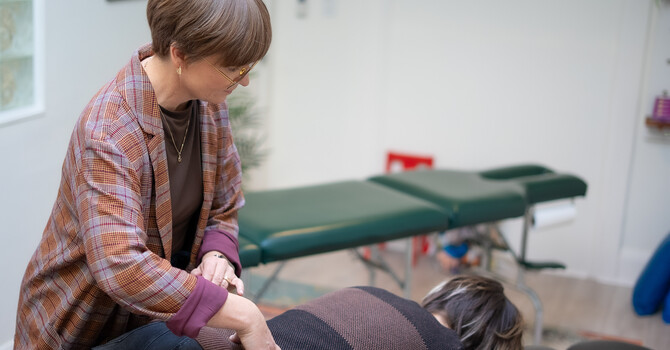
Hormonal changes can affect several aspects of wellbeing, and different types of care may be useful for different concerns.Chiropractic CareIf you're experiencing neck or back discomfort, joint stiffness, headaches or changes in mobility, chiropractic care may be helpful for appropriate musculoskeletal concerns.At Vivid Health Toronto, Dr. Danielle Gilas DC provides chiropractic care using Network Spinal, Activator Methods, soft-tissue work and traditional chiropractic adjustments when appropriate.Chiropractic care doesn't treat the hormonal changes of perimenopause directly, but it may be an option for addressing related physical discomfort and movement concerns.AcupunctureSome women explore acupuncture for concerns such as pain, stress, sleep or menopausal symptoms.Research suggests acupuncture may help certain pain conditions, while evidence for menopausal hot flashes and other symptoms is less consistent.It may be considered as a complementary option based on individual needs and preferences, rather than a replacement for established treatments.At Vivid Health Toronto, acupuncture is available as part of the care offered by qualified practitioners.You may choose naturopathic medicine, chiropractic, acupuncture or a combination of services depending on your needs.You don't need every service. You need the care that makes sense for you.
Perimenopause Is a Transition—Not the End of Feeling Good
One of the biggest misconceptions about perimenopause is that feeling tired, moody, uncomfortable or unlike yourself is simply something women have to accept.Yes, hormonal changes are a natural part of life.But that doesn't mean every symptom should be ignored.You deserve to sleep well.To feel strong.To understand what's happening in your body.To have your concerns taken seriously.And to know what options are available.For some women, perimenopause is relatively uneventful.For others, it's a challenging few years filled with unexpected changes.Both experiences are valid.The important thing is recognizing that there are ways to manage symptoms and support your health through this stage of life.
Find Support for Perimenopause at Vivid Health Toronto
If you've been wondering why you suddenly don't feel quite like yourself, it may be time to have a conversation about perimenopause.At Vivid Health Toronto, Dr. Kim Callaghan, ND, offers individualized naturopathic care for women navigating perimenopause, menopause and beyond.With more than 25 years in practice and advanced menopause education, Dr. Kim brings experience, curiosity and a thoughtful approach to understanding your symptoms and concerns.Whether you're dealing with sleep changes, mood shifts, fatigue, brain fog, hot flashes or questions about hormone testing and treatment options, you don't have to sort through all the conflicting information alone.Your hormones may be changing, but feeling well and living fully still matter.Ready to better understand what's happening?Book a naturopathic appointment with Dr. Kim Callaghan, ND, at Vivid Health Toronto.
Kim Callaghan, ND
Contact Me